Article
Total Rewards ‘25 in Orlando: the future of compensation runs through AI, personalization and strategy
The largest global conference on compensation and benefits: "the traditional Total Rewards model is being replaced"
Published Jun 3, 2025
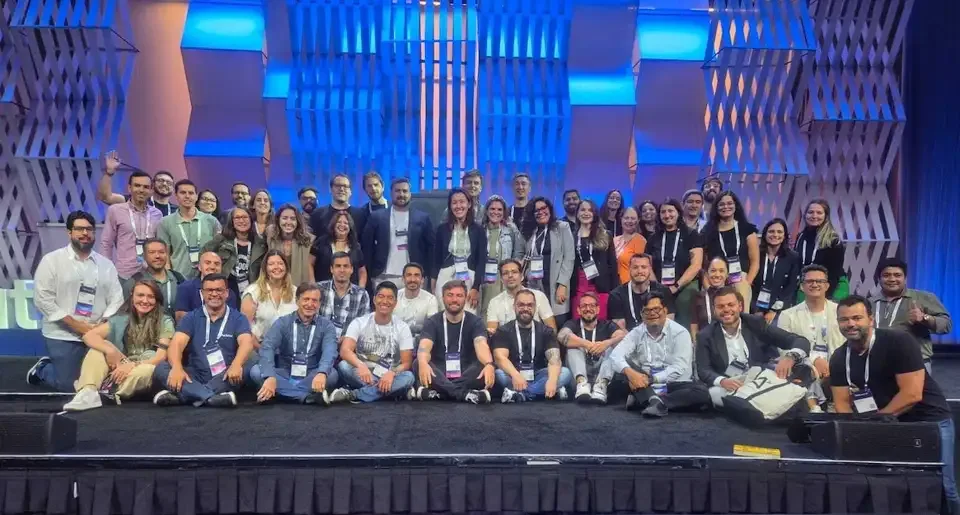
In a landscape of fast-changing employment relationships, Total Rewards 2025, the largest global conference on compensation and benefits, held by WorldatWork in Orlando, made one thing clear: the traditional Total Rewards model is being replaced by approaches that are more technology-driven, personalized and strategic.
Over three days, leaders from companies like Microsoft, Accenture, Moderna, Adobe, Deloitte, Colgate, Energisa and Saudi Aramco shared views, cases and lessons about the future of the field. The event did not just discuss trends: it gave a clear picture of a function that is moving away from operations and becoming a protagonist in creating value for the business and for people.
This article covers the main takeaways from Total Rewards 25, with an emphasis on innovation, data, job architecture and the strategic role of the function.
AI in Total Rewards: more than automation, a change in mindset
Although AI has dominated events for the past 2 years, at Total Rewards 25 it took on a new status: that of a structural component of compensation and benefits practice. Panels led by Microsoft, Accenture and Bristol Myers Squibb showed how AI is already being applied to transform processes, generate insights and improve efficiency.
At Microsoft, for example, Copilot-based solutions are used to analyze performance justifications in merit cycles. AI acts as an assistant, checking whether the criteria for impact and managerial behavior were addressed, and even suggesting wording adjustments. That data also feeds personalized communications to employees, with individual summaries of performance and recognition.
The impact is also visible in equity analysis. Instead of reviewing manual files or running isolated scripts, companies like Moderna and Accenture already integrate AI for continuous pay equity audits, tracking variations in real time and recommending fixes before they become a reputational risk.
More than automating tasks, AI is pushing professionals in the field to develop new skills, such as analytical interpretation, systems thinking and fluency in technology. According to Filipe Ducas, Co-founder and Senior Compensation Executive at Zivo, “compensation has always been the last area to adopt technology, and maybe that is why it now has the biggest opportunity to leap ahead. AI does not come just to automate spreadsheets or speed up cycles; it redefines the strategic role of the function and demands a new mix of skills: reading data, systems thinking and human sensitivity. Whoever masters this triad of technology, context and impact will lead the future of Total Rewards.”
As Kristen Dimlow of Microsoft put it, “we are between phase 1 and 2 of AI adoption. But even in phase 3, with autonomous agents running entire processes, humans will remain essential to ensure ethics, context and strategic decisions.”
For Guilherme Tomazin, Total Rewards Director at Neon, the event clearly showed how AI is reshaping the field: “The richest discussions were about applying artificial intelligence, from job matching to proactive budget management. It is encouraging to see the field questioning the status quo and exploring new solutions with technology.”
He also highlights the importance of soft skills in this new landscape, such as executive communication and creativity as strategic differentiators: “These skills are just as crucial as the technical ones, and the further we move in our careers, the more they matter for the impact we can create.”
For Chris Gerlach, CEO of Zivo, AI should become ubiquitous across compensation work in the coming years: “I see AI as the tipping point that will turn the compensation function into something more strategic, more tied to the business. AI forces us to stop being just process operators and start acting as decision designers: what to measure, how to interpret it and how to communicate it. And in a world where machines give near-instant answers, the differentiator becomes something else: who knows how to ask the right questions, and make the right decisions, for each company's unique context.”
In the webinar, Zivo, iFood Benefícios and the Remuneração em Foco community discussed the main insights from the event. Watch now!
Critical skills through 2030: Antonio Linhares' view at Total Rewards 25
One of the program's highlights was the panel “Building Your Future: Critical Total Rewards Skills by 2030”, which brought together leaders from the WorldatWork Global Advisory Council to discuss the skills that will define the future of the field. Antonio Linhares, People Director at Grupo Energisa, represented Brazil on stage alongside executives from Siemens and Aramco, offering a practical and inspiring perspective on the human role amid the technology revolution.
In his talk, Antonio argued that Total Rewards professionals need to evolve from users to architects of technology: people who can interpret data in depth, ask the right questions and apply business intelligence to digital tools:
“In the age of artificial intelligence, our role should be more that of architects than of passive users. Those with more experience in the market know how to interpret data better and ask the right questions.”
For him, the secret is to combine logical reasoning with hands-on experience, and to prepare young people to explore different areas beyond compensation, broadening their view and strengthening their analytical power: “Let's use AI to amplify our experience, not to replace it.”
Linhares also stressed the importance of developing technical and behavioral skills together, such as the ability to tell stories with data (storytelling), adapt quickly to change and keep curiosity active in a context of continuous learning.
This view is fully aligned with the trends highlighted by research from the World Economic Forum, Gartner and EY, which point to a future where skills like agility, communication and digital fluency will be as essential as technical command of salary structures or job evaluation.
The third pillar of Zivo's work is expertise. For Pedro, technology without technical understanding does not solve the real dilemmas that come up at the decision table. That is why the company bets on personalized diagnostics, delivered by specialists who know both the methodology and the business dynamics of their clients.
“It is technical knowledge, combined with an understanding of business strategy, that turns data into viable and effective decisions, in a complete ecosystem,” he said. “At the end of the day, we want to help companies stop looking at compensation only to put out fires, so they can be intentional and proactive.”
Transparency and personalization: from outside pressure to strategic differentiation
Another clear shift is the growing demand for transparency in compensation practices. Adobe shared its journey of building a policy that goes beyond publishing salary ranges, also covering the “why” and the “how” behind the values. The impact was clear: according to data presented on the panel, employees who understand their compensation are up to 8 times more likely to feel they are paid fairly.
Personalization also came up as an imperative. Whether because of multiple generations in the workforce or the spread of remote work, offering flexible packages adapted to each employee's reality is no longer a competitive edge. It is a basic expectation.
According to Elisa Amorim, founder of the Compensation em Foco community, “Pay transparency has often been misunderstood in the corporate world. It is not about publicly exposing how much each employee earns, but about giving clarity on salary ranges and growth potential within the organization. When a company adopts this practice, it empowers its employees with information that lets them make more informed decisions about their careers, clearly understanding their possibilities for development and salary progression within the organization.”
In this context, chatbots stand out as tools for democratizing access to information. Resideo, for example, created an agent called Rae, trained on internal documents and specific instructions about compensation, benefits and company policies. The result: fewer operational questions for HR and more clarity for employees about their total package.
But personalization is not limited to support. Intelligent platforms are starting to suggest benefits based on behavioral data and stated preferences. The future ahead is a rewards experience as fluid and responsive as an e-commerce one.
Job architecture: from a static structure to a dynamic ecosystem of skills
Amid these changes, one discussion gained strength at Total Rewards 25: how do you structure the foundation on which all these innovations will be built? The answer lies in redesigning job architecture.
The “Job Architecture 2.0” panel highlighted an important shift: the move from a logic of fixed jobs to frameworks driven by skills, mobility and career planning. According to Deloitte research presented at the event, 64% of companies already use architecture models at a global scale, but many still operate with rigid structures that make quick adjustments hard when the organization changes.
The experts argued that a modern architecture needs to integrate:
- Dynamic job descriptions, kept up to date with real data on how people work
- Flexible career paths
- Automated assessments of skills and contributions
- Connections to upskilling and reskilling strategies
This approach not only strengthens compensation management, it also enables more strategic talent management, connecting performance, potential and reward.
Equity at technology companies: balancing appeal and sustainability
The technology industry, historically aggressive on variable pay and equity, is going through a realignment. On one side, there is pressure to attract talent in critical areas like AI and data engineering; on the other, investors are demanding accountability on dilution and the sustainability of packages.
The panel on tech equity showed that, although the total volume of equity granted remains stable, there was a significant redistribution across profiles and priority roles. Roles directly tied to creating technological value, such as machine learning, AI and security, remain highly valued. Administrative and support roles, meanwhile, are getting smaller share allocations.
According to Lilian Kazama, Total Rewards and People Operations Director at iFood, “The current economic context is causing an important shift in compensation strategies. If equity plans used to be the stars of the package, especially at technology companies, we are now seeing a move back to private pension plans. This change reflects a search for more predictability and financial security, in contrast to the volatility of stocks. It is a transformation that makes us rethink traditional compensation models and how well they fit today's macroeconomic scenario.”
In addition, companies are working to regionalize equity more intelligently, taking into account geographic differences, cost of living and market maturity.
The new strategic role of Total Rewards
More than following trends, the Total Rewards function needs to take an active role in defining the future of work. That was the provocation of the “From Cost to Investment” panel, which brought together Colgate and Comcast.
According to the leaders there, even with budgets under more pressure, the current challenge is not to cut but to reallocate resources intelligently, focusing on what matters to people and to the business. That means:
- Mapping what actually creates value in the employee's eyes
- Investing in financial well-being, mental health and internal mobility
- Measuring ROI continuously and in an integrated way
As Joe Pitra of Comcast summed it up: “If people do not understand the package they receive, if it does not make sense in their journey or does not support their health and safety, it does not help to be competitive on paper. It will fail in practice”.
Conclusion: innovation is not optional, it is the way forward
Total Rewards 25 showed that compensation and benefits are at the center of a deep transformation, one that affects culture, strategy and the employee experience.
The future of the field involves:
- Adopting technology with intention
- Building experiences that are more human, personalized and inclusive
- Strengthening the credibility and transparency of decisions
- Repositioning Total Rewards as a strategic pillar of value
In the webinar, Zivo, iFood Benefícios and the Remuneração em Foco community discussed the main insights from the event. Watch now!